MPs question Sh1 billion unsupported spending, ethnic imbalance at NKPCU
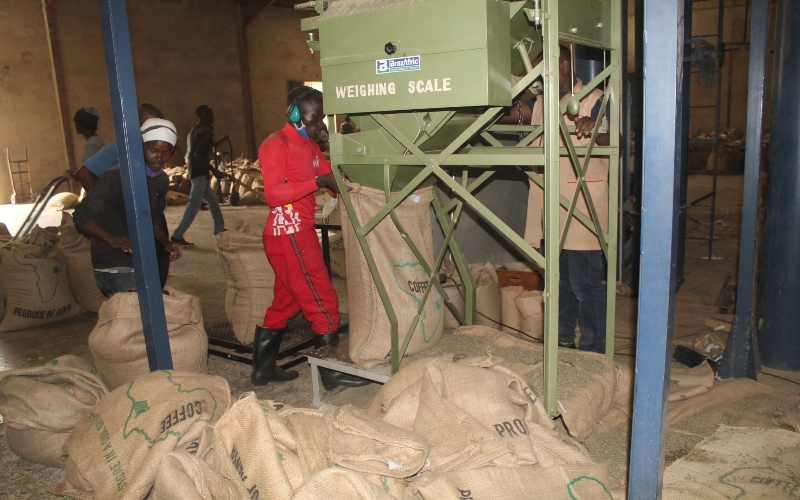
Parliament’s investments committee has queried over Sh1 billion in unsupported spending and irregular staffing at NKPCU, demanding documents on coffee subsidy funds, debts and board appointments within two weeks.
The National Assembly’s oversight team has raised serious questions over financial and administrative practices at the New Kenya Planters Cooperative Union, uncovering more than one billion shillings in unverified expenditure and irregular staff management.
The Public Investments Committee on Social Services, Administration and Agriculture, chaired by Navakholo MP Emmanuel Wangwe, said the findings reveal systemic weaknesses in an institution tasked with supporting Kenya’s coffee sector.
During a grilling session, NKPCU officials, led by CEO Timothy Mirugi, were pressed to clarify discrepancies highlighted in the Auditor-General’s reports for the 2022/2023 and 2023/2024 financial periods. MPs expressed concern over the institution’s apparent lack of accountability in managing public funds meant to aid coffee farmers.
Central to the scrutiny was Sh1,001,336,765 listed as unsupported expenditure under the Farm Input Subsidy Program.
This included Sh940,327,427.29 for farm inputs and Sh61,009,346.20 for awareness campaigns targeting coffee-growing counties.
“No satisfactory supporting documentation has been provided for this massive expenditure,” MP Wambugu Wainaina said, referencing the audit report.
While NKPCU management claimed to have submitted supporting schedules to the Auditor-General, MPs found them incomplete, missing critical verification, such as invoice numbers. Lawmakers described the gaps as “red flags” and demanded urgent clarification on how the funds were used.
The Committee also questioned Director of Finance and Accounting Ednah Kerubo regarding a Sh73 million budget overrun. Against an allocated budget of Sh452,200,000, the union spent Sh518,365,837 without approval.
“This represents a fundamental breakdown in financial controls,” MPs remarked, with management admitting they had no authority to overspend.
Another area of concern was the retention of eight officers past the mandatory retirement age of 60 without formal approval. Management defended the decision, citing the need for continuity in running specialised milling machinery inherited from the former KPCU.
“The retention was necessary to maintain operations involving specialised coffee processing equipment,” CEO Mirugi said.
However, MPs rejected this reasoning. Wangwe insisted: “Operational necessity does not override the law.
Extending employment beyond 60 requires formal approval, which was not sought.”
They added that retaining older officers denied opportunities to young, qualified Kenyans. Management confirmed the officers have now retired, but the Committee requested board approval documents and details on the five essential machine operators.
MPs also noted an ethnic imbalance in the workforce, with almost half of the staff drawn from a single community.
MP Martin Owino argued that NKPCU must “reflect the face of Kenya,” emphasising that public institutions should promote diversity.
Management attributed the situation to staff inherited from the defunct KPCU, but MPs called for a clear recruitment policy to correct the disparity.
Other concerns included longstanding debts and the unauthorised reallocation of funds intended for farmers or farm inputs to a processing company.
Mirugi admitted that no approval was sought from the National Treasury for the diversion, prompting Wangwe to caution that the matter “may warrant the intervention of the Cabinet Secretary.”
On debt recovery, the Committee highlighted a collection of just Sh6 million out of Sh94 million, a mere 6.4% recovery rate. MPs instructed CEO Mirugi to provide a full list of all individuals and companies owing money to NKPCU.
The Committee concluded the session by ordering management to submit documents within two weeks, including proof of appointment for four board members, payment vouchers for allowances, meeting records preceding appointment letters dated May 23, 2022, and a comprehensive debtors’ schedule. All documents must be copied to the Auditor-General.
Wangwe emphasised Parliament’s role in ensuring public funds are safeguarded.
“We must ensure that every shilling allocated to support our coffee farmers is used transparently and efficiently,” he said. “Coffee represents the next gold opportunity for Kenya, and accountability is paramount.”
Top Stories Today